
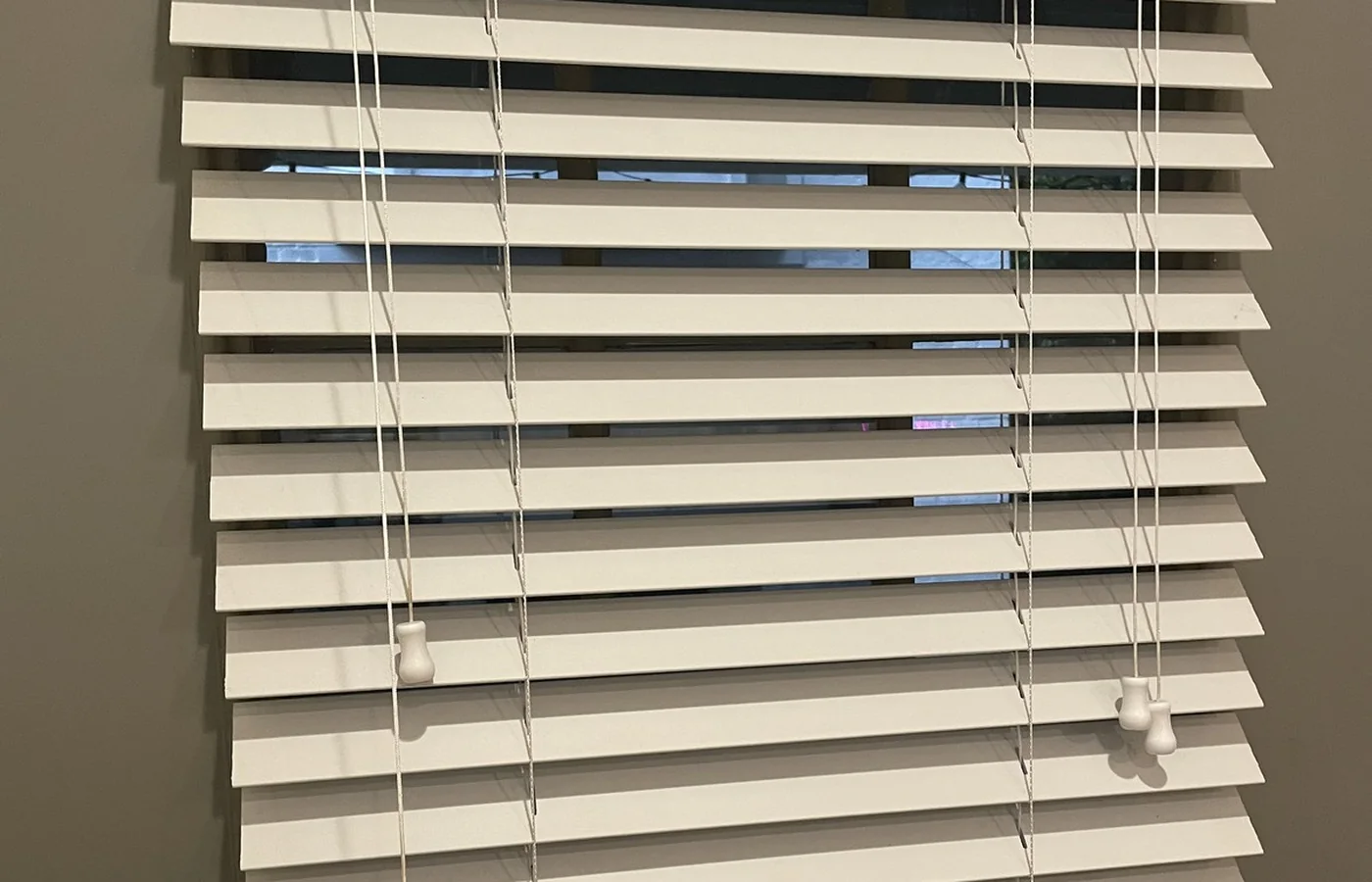
Where this category is commonly used
- Bedrooms, living rooms, offices, kitchens, and everyday privacy
- Homeowners who want adjustable slats rather than a single sheet of fabric
- Traditional, transitional, coastal, farmhouse, and contemporary interiors
- Projects where painted whites, wood tones, or coordinated trim colors matter
Important material and design comparisons
Real wood is typically lighter than similarly sized faux wood and can offer richer natural grain.
Faux wood is often selected for humidity, easy cleaning, and consistent painted finishes.
Wide faux-wood blinds can become heavy, making lift system and divider-rail planning important.
Slat size, valance style, ladder system, route holes, cordless lift, and motorized tilt all affect the finished appearance.
Questions to ask before ordering
- Is the room regularly humid or exposed to condensation?
- How wide and tall is the opening, and will one blind be too heavy?
- Is the priority natural wood character, moisture tolerance, price, or easy maintenance?
- Will the blind be mounted inside the frame, outside the frame, or on a door?
Cleaning and maintenance
Dust with a microfiber cloth or vacuum using a soft brush. Avoid soaking real wood. Follow the manufacturer’s instructions for cleaning faux-wood slats and painted finishes.
Common questions
Are faux-wood blinds better for bathrooms and kitchens?
They are often compared for humid rooms because many faux-wood materials tolerate moisture better than real wood. Exact suitability depends on the product and ventilation.
Do wood blinds work on wide windows?
They can, but weight and slat sag should be discussed. Multiple blinds on one headrail or divided configurations may operate better.
Can blinds be motorized?
Some systems offer motorized tilt or lift. The available option depends on the brand, size, power source, and dealer.