Where this category is commonly used
- Modern and transitional interiors
- Bedrooms, offices, media rooms, kitchens, and commercial spaces
- Windows that need a compact treatment with minimal visual bulk
- Manual or motorized projects with coordinated fabrics
Important material and design comparisons
Light-filtering fabrics soften daylight without fully blocking it.
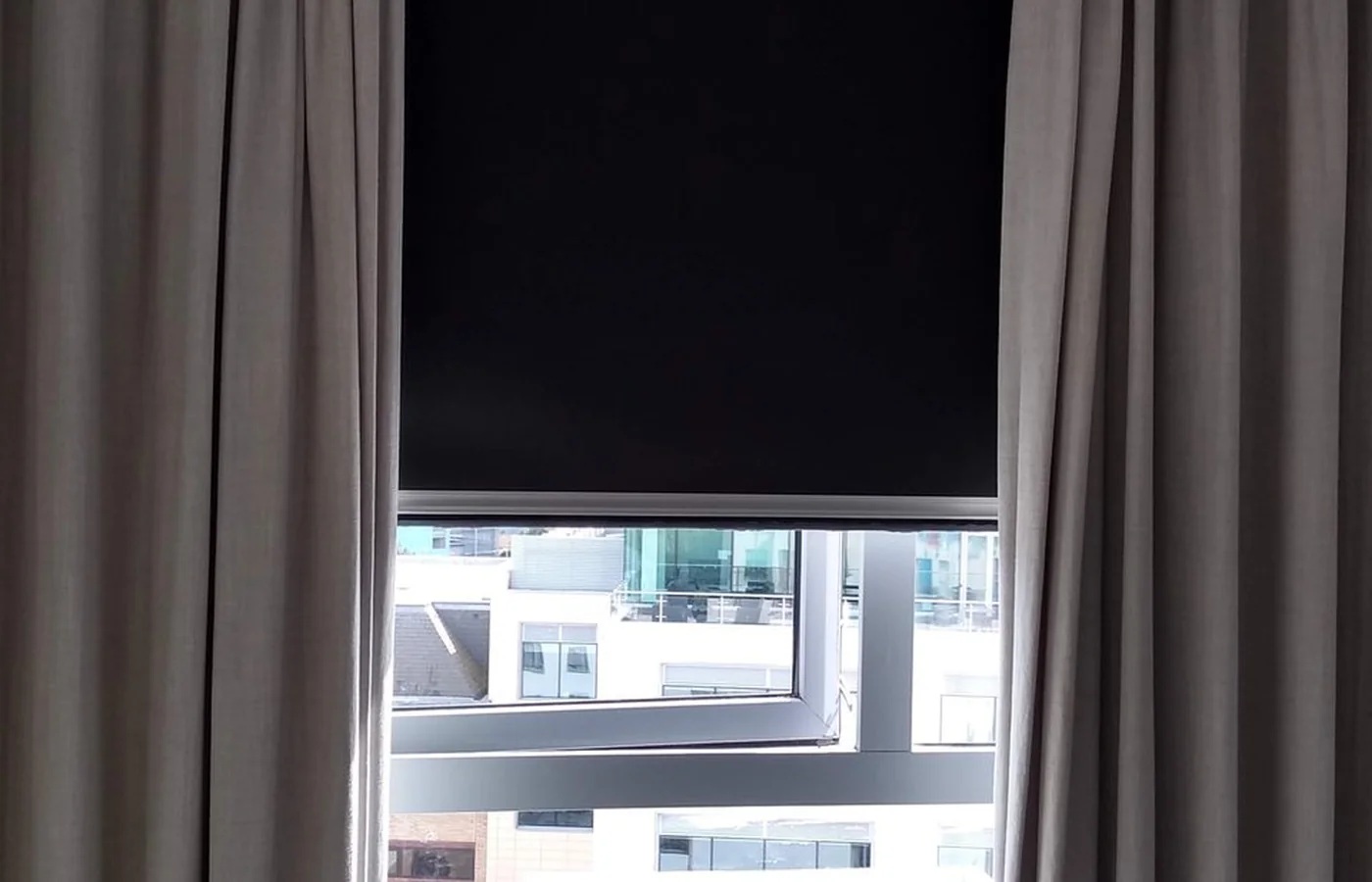
Blackout fabrics reduce transmitted light, but side gaps can still allow light unless channels or special systems are used.
Decorative roller fabrics prioritize color and texture, while technical solar fabrics prioritize glare and heat management.
Cassette, fascia, exposed roll, reverse roll, and hem-bar choices affect appearance and clearance.
Questions to ask before ordering
- Is the goal privacy, daylight, blackout, glare reduction, or decoration?
- How much mounting depth is available?
- Will side gaps be acceptable?
- Is the shade manual, cordless, battery powered, wired, or integrated with controls?
Cleaning and maintenance
Vacuum gently with a soft brush or spot clean only as the fabric manufacturer recommends. Do not crease or aggressively scrub coated fabrics.
Common questions
Do roller shades provide complete blackout?
Blackout fabric blocks light through the material, but ordinary installations can have side and top gaps. Channels and specialized systems improve room darkening.
Can roller shades cover wide windows?
Yes, but tube deflection, fabric width, seam placement, control capacity, and mounting support must be considered.
Are roller shades easy to motorize?
They are among the most common motorized categories, though the correct motor and tube depend on size and fabric weight.