
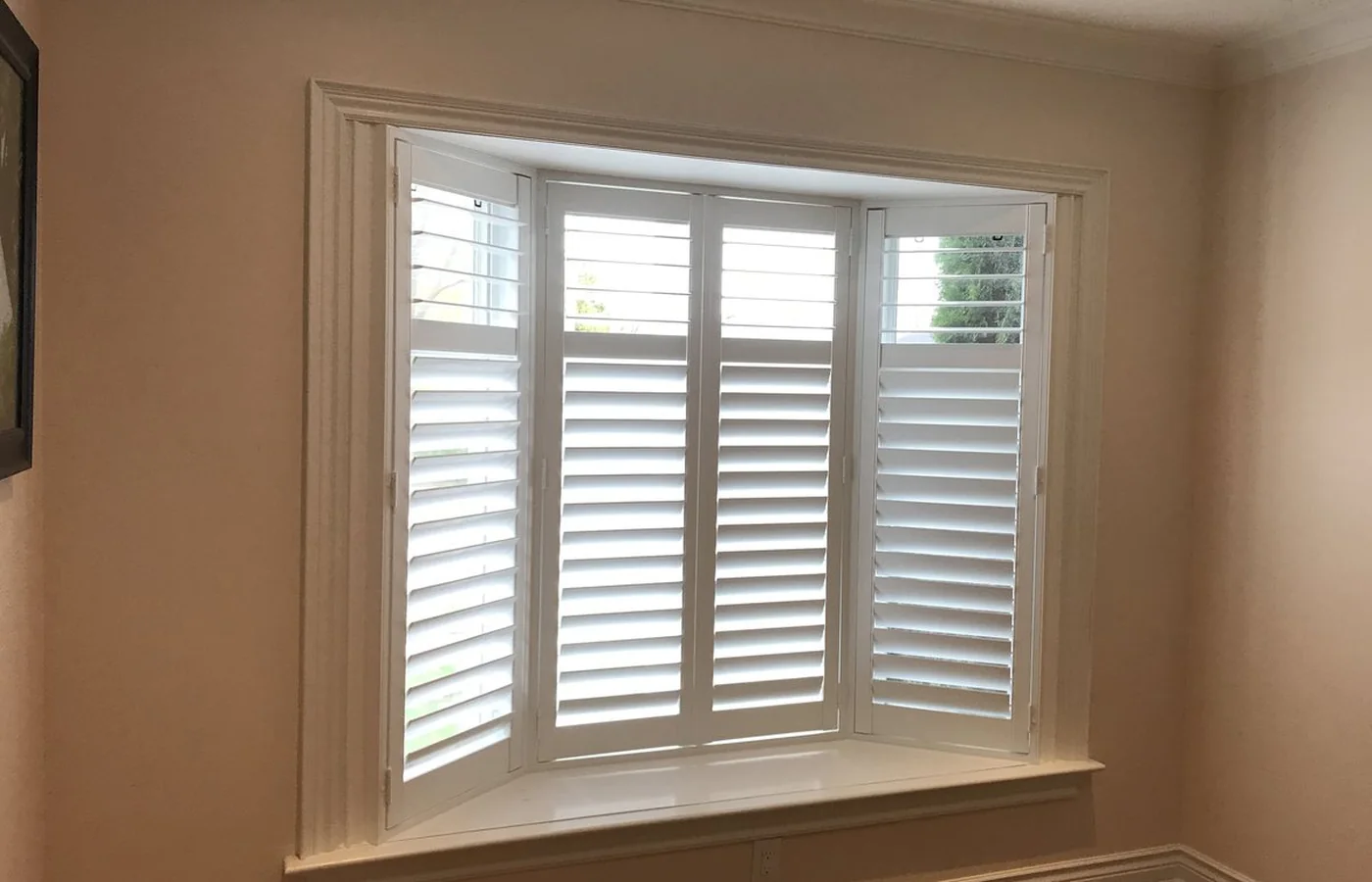
Where this category is commonly used
- Homeowners seeking a built-in architectural appearance
- Living rooms, bedrooms, dining areas, offices, and street-facing windows
- Specialty shapes and arched windows
- Projects emphasizing durable cordless operation
Important material and design comparisons
Wood offers natural character and can be lighter, while composite and poly materials are often considered for moisture and consistency.
Larger louvers provide a broader view when open; smaller louvers create a more traditional scale.
Inside-mount and outside-mount frames change trim interaction and light gaps.
Bypass and bifold systems can be used on doors and wide openings but require clearance planning.
Questions to ask before ordering
- What material fits the room and climate?
- Does the window have enough depth for the desired frame?
- How many panels and divider rails are appropriate?
- Will handles, locks, tilt-in sashes, or furniture interfere?
Cleaning and maintenance
Dust louvers and frames regularly. Use a damp—not soaking—cloth when permitted by the material manufacturer. Check loose magnets, hinges, and tension screws.
Common questions
Do plantation shutters add value?
They can be viewed as a durable, integrated window treatment, but value depends on quality, fit, style, and market preference.
Are shutters good for humid rooms?
Certain composite or poly materials may be suitable. Verify the product’s moisture guidance.
Can broken louvers be repaired?
Louvers, pins, staples, tilt components, magnets, and hinges can often be repaired if matching parts are available.